Evolving an established product for a new development lifecycle
Product strategy · AI-driven development
For years, testing was designed around people working in a visual application. As coding agents moved more work into terminals and pull requests, our team had to rethink who needed the product, how they would access it, and how to keep serving the customers who already depended on it.
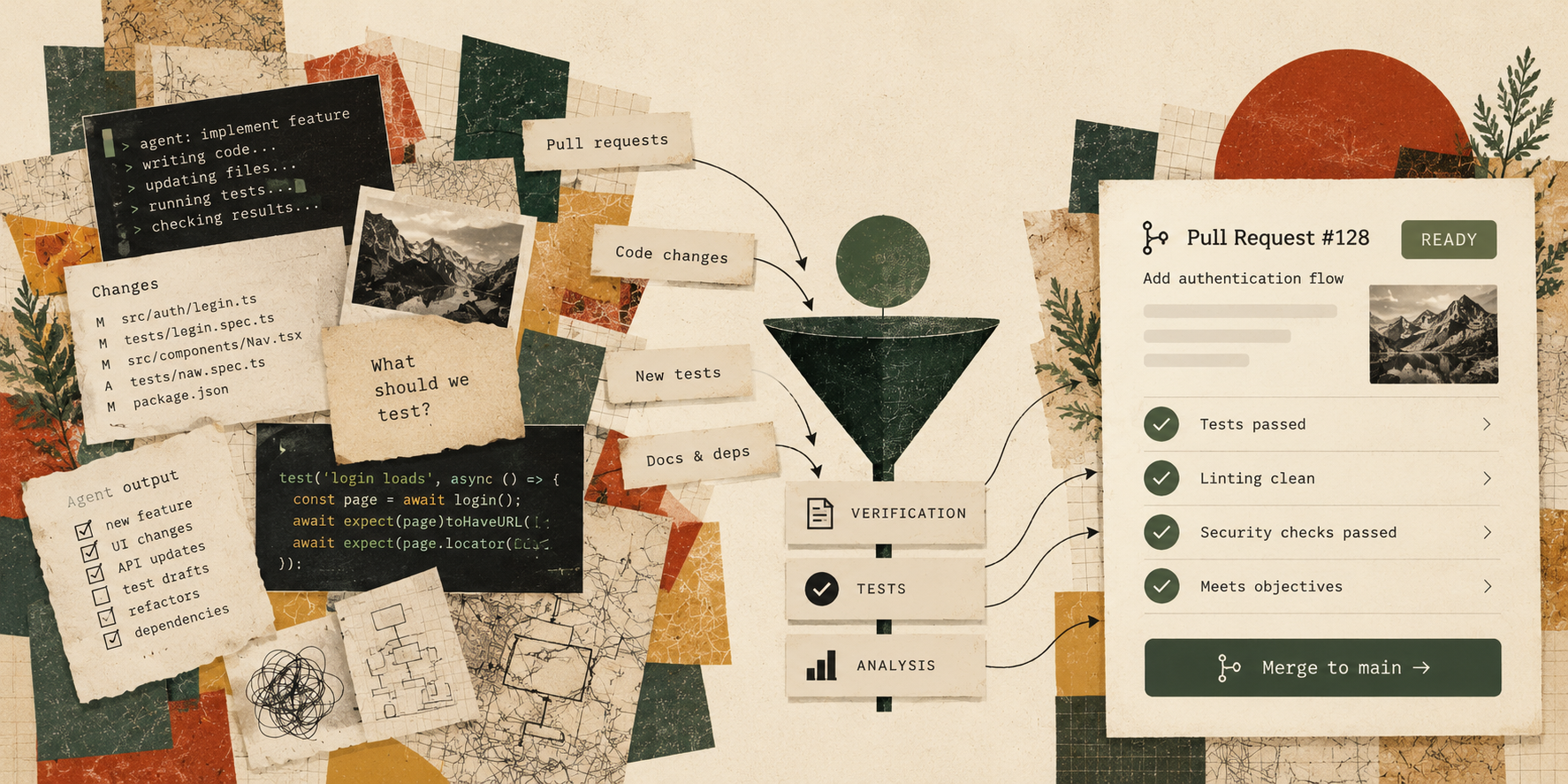
The problem
Established customers still needed approachable ways to create, run, and manage automated tests. Meanwhile, agent-driven development was changing expectations about where software tools should be accessible. We had to consider new users and interaction patterns without losing what made the existing experience useful. This was as much a product and prioritization challenge as a technical one.
What we explored
- We looked at how the development lifecycle was changing and where independent verification could be useful, whether someone was working in the application, a terminal, or a pull request.
- Exploring what verification could look like closer to a developer's workflow helped the team discuss tradeoffs around clarity, confidence, and continuity between interfaces.
- Product, design, and engineering explored how the same testing capabilities could work across a visual interface, MCP, CLI, and APIs, with different experiences built around the same underlying work.
- We kept track of what was already working, what was experimental, and what would need more investment before customers could rely on it.
- The work also required balancing new workflows with existing customer needs, and giving several engineering teams enough shared direction to make progress without pretending every detail was settled.
What we're learning
- The prototypes exposed product and technical gaps that were easy to miss in strategy discussions.
- We began treating the interface as one way into the product, rather than the center of every workflow.
- The familiar innovator's dilemma showed up in practical prioritization decisions: invest in what existing customers depend on, while making room for users and workflows that are still emerging.
- There's no clean handoff from the old model to the new one. The ongoing work is finding ways for both to coexist without losing what made the product useful in the first place.